CD 1
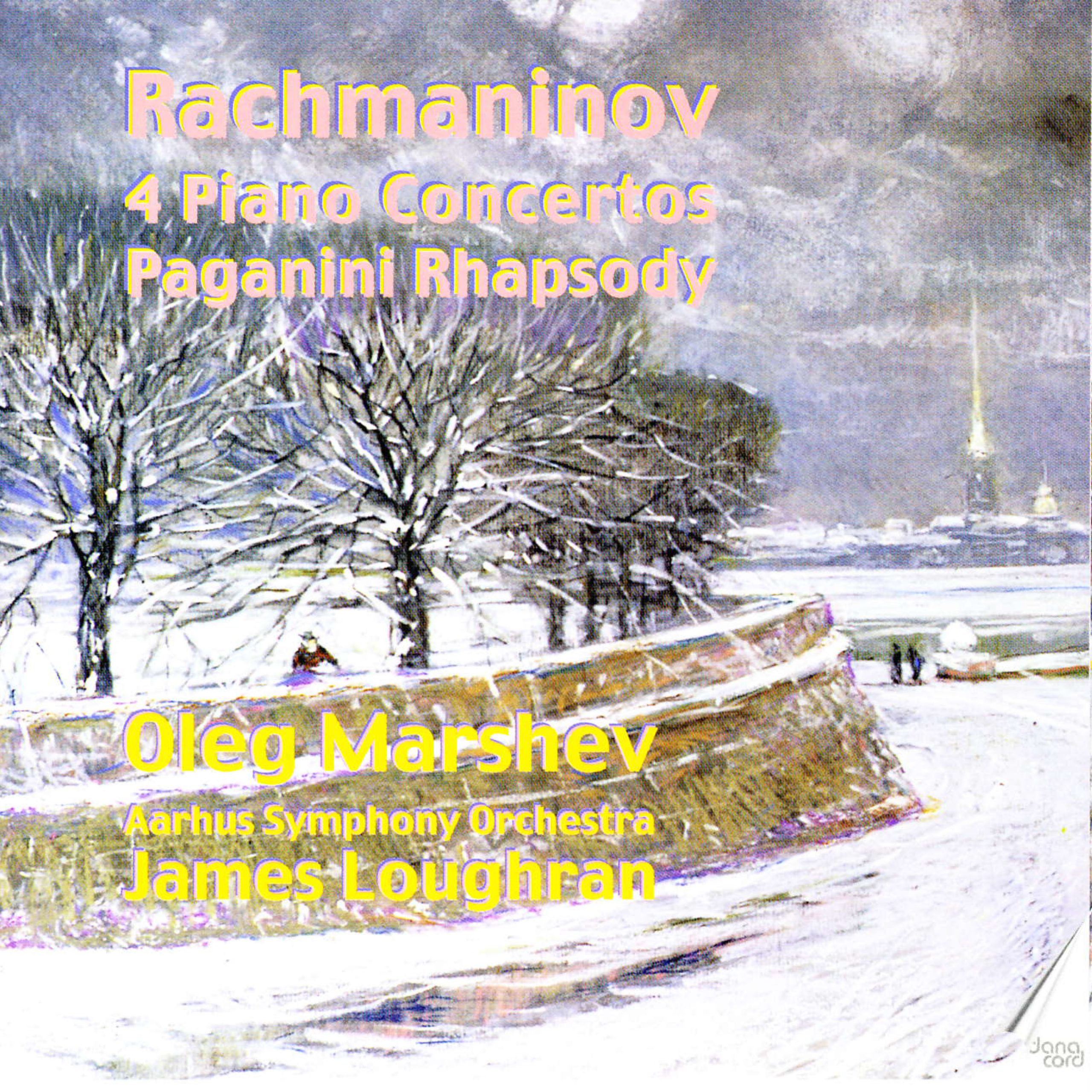
Sergei Rachmaninov
Piano Concerto No I in F sharp minor, Op. 1
1. Vivace
2. Andante
3. Allegro vivace
Piano Concerto No. 2 in C minor, Op.18
4. Moderato
5. Adagio sostenuto
6. Allegro scherzando
CD 2
Piano Concerto No 3 in D minor, Op.30
1. Allegro ma non tanto
2. Adagio
3. Alla breve
CD 3
Piano Concerto No 4 in G minor, Op.40
1. Allegro vivace
2. Largo
3. Allegro vivace
Rhapsody on a Theme by Paganini in A minor, Op.43
4. Introduction
5. Variation I (Precedente)
6. Theme
7. Variation II
8. Variation III
9. Variation IV
10.Variation V
11. Variation VI
12.Variation VII
13.Variation VIII
14.Variation IX
15. Variation X
16. Variation XI
17. Variation XII
18.Variation XIII
19. Variation XIV
20. Variation XV
21. Variation XVI
22. Variation XVII
23. Variation XVIII
24. Variation XIX
25. Variation XX
26. Variation XXI
27. Variation XXII
28. Variation XXIII
29. Variation XXIV
The Piano Concertos ©
This first concerto was completed in 1891 (the first movement a year before), and underwent a wholesale revision in 1917, by which time the 2nd (1901 )
and 3rd (1909) Concertos had been written. And in fact the first theme in the original version is accompanied at this point by simple harmonic arpeggios. Has Rachmaninov’s revision introduced an extraneous element, a garish “tarting up” of a simple original? Presman’s story, quoted at the beginning, would seem to show that the contrast between a slow-moving backdrop and neurotic chromatic activity was inborn in him and the revision has simply brought out
something already implicit but which he was perhaps not technically able to realise at the age of 18. The concerto as revised is certainly consistent in its
language; while it has youthful freshness it also represents a bridge between the straightforward romanticism of nos. 2 and 3 and the more acerbic world of
the 4th Concerto. Any reservations are likely to centre on the finale since, while the soloist dashes around most glitteringly the themes are too cluttered to lodge in the memory as do those of the other concertos. The first-time listener familiar with the later works may be surprised to find that the slower, romantic music of the central section does not return to make a grandiose peroration at the end. He may be more surprised still to know that it actually did so in the original version; the more experienced Rachmaninov evidently felt it could not take such treatment, as the similar themes in the later concertos (for all the critical flak they have attracted) can.
RELEASE DATE: MARCH 2002
CATALOGUE NUMBER: DACOCD 583-583
EAN: 5709499582831