
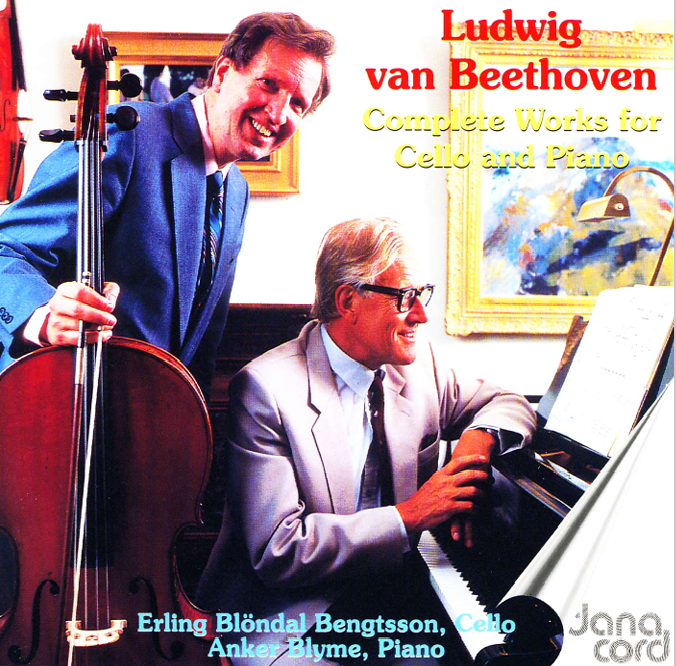
Sonata No. 1 in F Major, Op.5 No. 1 (1796)
1. Adagio sostenuto – Allegro
2. Rondo. Allegro vivace
Sonata No. 2 in G minor, Op.5 No.2 (1796)
3. Adagio sostenuoo e espressivo – Allegro molto più tosto presto
4. Allegro
5. 12 Variations (in G Major) WoO 45; (1796) on the Theme from the Oratorio “Judas Maccabaeus” by George Friedrich Handel
6. 7 Variations (in E flat Major) WoO 46; (1801) on the Theme “Bei Männern, welche Liebe fühlen” from the Opera “Die Zauberflöte” by Wolfgang Amadeus Mozart
CD 2
Sonata No.3 in A Major, Op.69 (1807-08)
1. Allegro ma non tanto
2. Allegro molto
3. Adagio cantabile – Allegro vivace
Sonata No.4 in C Major Op. 102 No. 1 (1815)
4. Andante – Allegro vivace
5. Adagio – Allegro vivace
Sonata No. 5 in D Major, Op. 102 No. 2 (1815)
6. Allegro con brio
7. Adagio con molto sentimento d’affeto – Allegro fugato
8. 12 Variations (in F Major) Op. 66 (1798) – on the Theme “Ein Mädchen oder Weibchen” from the opera “Die Zauberflöte” by Wolfgang Amadeus Mozart
Beethoven’s Cello Sonatas ©
The cello sonata with piano accompaniment is a relatively recent phenomen in the history of music. It is true that innumerable cello sonatas were composed during the baroque period, but they were sonatas with figured bass accompaniment rather than duo works as such. Vivaldi, for one, has a number to his credit. Consequently, Ludwig van Beethoven’s (1770-1827) cello sonatas, as the first actual duo works for the cello and a keyboard instrument, are of considerable historical importance besides being wonderful pieces in themselves.
RELEASE DATE: SEPTEMBER 1998
CATALOGUE NUMBER: DACOCD 333-334
EAN: 5709499333341

