Moritz Moszkowski
1. Valse op. 34-1
2. Offenbach (arr: Moszkowski): Barcarole aus Hoffmanns Erzählungen
3. Zephyr op. 57-4
4. Liebeswalzer op. 57-5
5. Wagner (arr: Moszkowski) Isoldens Tod – Schluß Szene aus Tristan und Isolde
6. Étude op. 72-13
7. Zwiegesang (Duo) op. 52-3
8. Die Jongleurin op. 52-4
9. En Automne op. 36-4
10. Etincelles op. 36-6
11. Polonaise op. 17-1
12. Guitare op. 45-2
13. Caprice espagnol op. 37
14. Bizet (arr: Moszkowski) Carmen – Chanson bohème
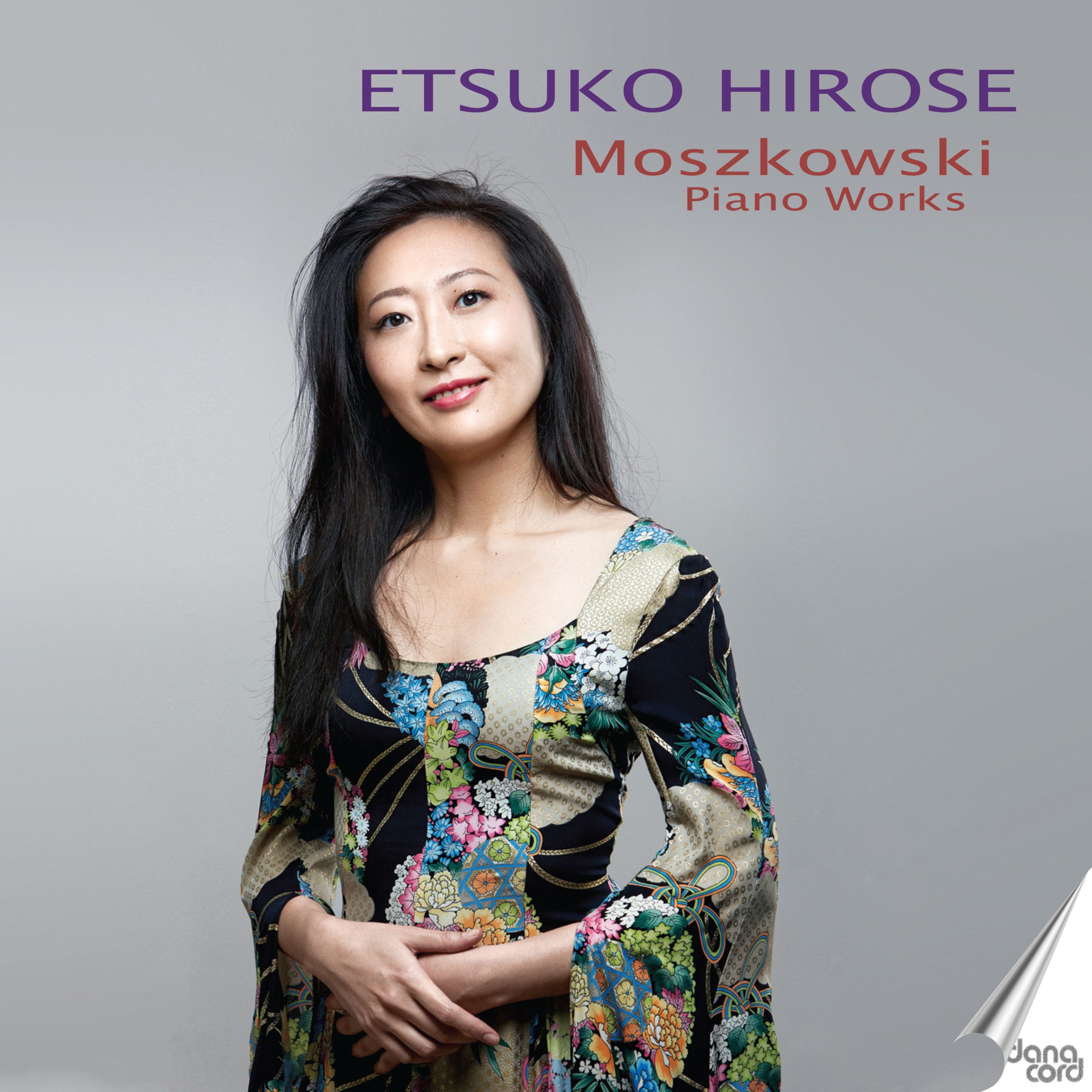
Moritz Moszkowski © Etsuko Hirose
Moritz Moszkowski was born in Breslau (now Wroclaw, Poland) on 23 August 1854 in a well-off Jewish family. In 1865, the family moved to Dresden where Moritz showed his precocious talent for music. In 1869 he went to Berlin to study in the Stern Conservatory, then subsequently at Theodor Kullak Neue Akademie der Tonkunst, where he taught for over 25 years. A brilliant pianist, he began his career in Berlin in 1873 with great success and his reputation led to numerous tours all over Europe. His playing was not acrobatic, but he was a musician possessed of skills of incomparable delicacy, technical polish and a high sense of perfection of detail. Two years later, he played his concerto No.1 on two pianos with Franz Liszt who admired his talent. Although he won the warmest recognition from the Hungarian legend, he seems not to have been fully satisfied, and never published it (the manuscript was found 140 years later in an archive at the Bibliothèque Nationale de France). Later, when he had been asked to send the score of this concerto, he declined with humour for two reasons. “First, it is worthless; second, it is most convenient (the score being 400 pages long) for making my piano stool higher when I am engaged in studying better works.”
Also a good violinist, he often took the role of first violin in the Kullak Academy orchestra, and had an honorable career as a conductor as well. An excellent teacher with a reputation for being extremely demanding, he had among his pupils Josef Hofmann, Wanda Landowska, Gaby Casadesus, Joaquin Turina and Vlado Perlemuter. His compatriot Ignacy Paderewski said “After Chopin, Moszkowski best understands how to write for the piano, and his writing embraces the whole gamut of piano technique.”
In 1884, he married the youngest sister of Cecile Chaminade, Henriette. They settled in Berlin and had two children, Marcel (1887) and Sylvia (1889). But the marriage was a failure. In 1890, Henriette abandoned her family and went back alone to Paris. The divorce was finalized in 1892.
In 1897, Moszkowski moved to Paris. Henriette died in 1900 and in 1906, he lost his 17-year-old daughter Sylvia. In addition, after World War I, he was financially ruined, and during the last phase of the life, he lived in poverty and illness. Despite the concert organized on his behalf at Carnegie Hall with the participation of 14 eminent pianists including Wilhelm Backhaus, Ignaz
Friedmann, Percy Grainger and Josef Lhevinne, he died a few months later from stomach cancer on 4 March 1925.
Although Moszkowski is more or less forgotten today, he was known as a highly respected and popular pianist-composer in the late 19th and early 20th centuries. In my adolescence, I spent my time listening to the recordings of legendary pianists such as Josef Hofmann, Ignaz Friedman, Sergei Rachmaninoff and Vladimir Horowitz who used frequently to play Moszkowski’s works in their repertoire and I became familiar with his music through those recordings. Moszkowski kept his ideal and traditional aesthetic
of the Belle Epoque throughout his life; his polished salon music, both for its glittering brilliance and its subtle expressiveness, reflects the grace and spirit of that period which offers enchanting moments that are life-enhancing.
RELEASE DATE: MAY 2020
CATALOGUE NUMBER: DACOCD 866
EAN: 5709499866009